What is boiler feedwater treatment?
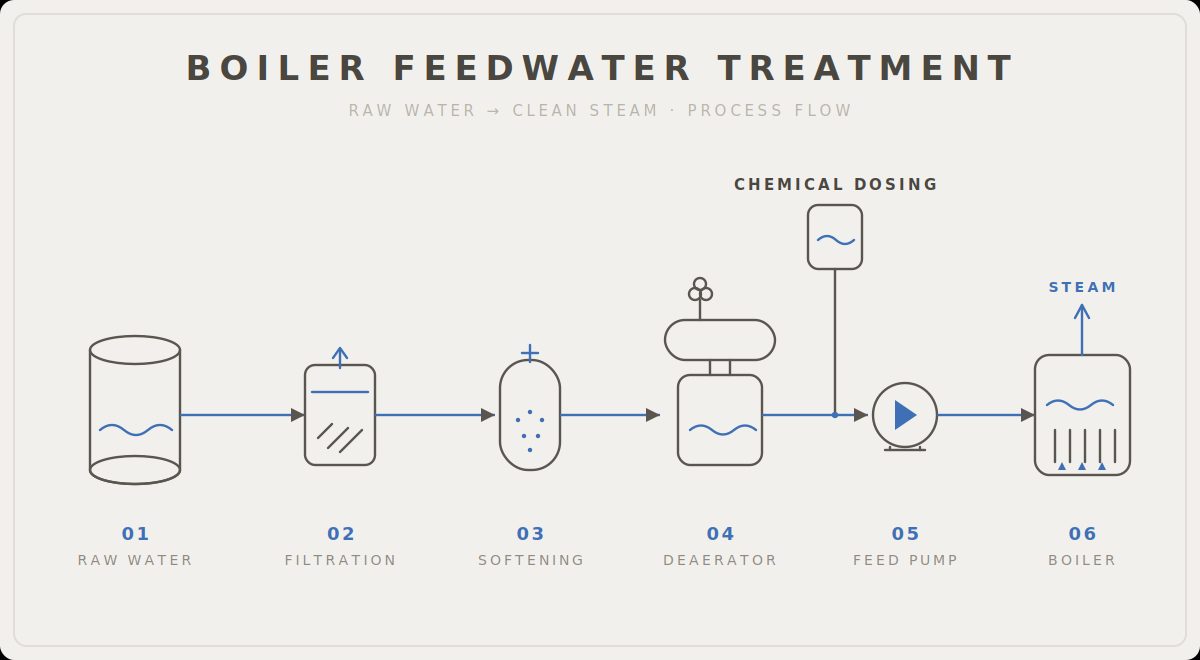
Boiler feedwater treatment is the process of removing or controlling impurities in the water supplied to a steam boiler so that it does not form scale, corrode metal surfaces, or carry contaminants into steam lines. Raw water from any source, whether municipal supply, borewell, or river, contains dissolved minerals, dissolved gases, and suspended solids. When this water is heated and turned into steam inside a boiler, these impurities stay behind and concentrate, damaging the boiler over time. Treatment keeps the boiler running safely at its designed efficiency and protects it from premature failure.
What is feedwater and where does it come from?
Feedwater is the water supplied to a boiler to be converted into steam. It is usually a mix of two sources: fresh make-up water that replaces water lost during operation, and returned condensate, which is steam that has cooled back into water and is recycled. No raw water source is pure, so both streams need attention before and during use.
Problem 1 — Scale formation
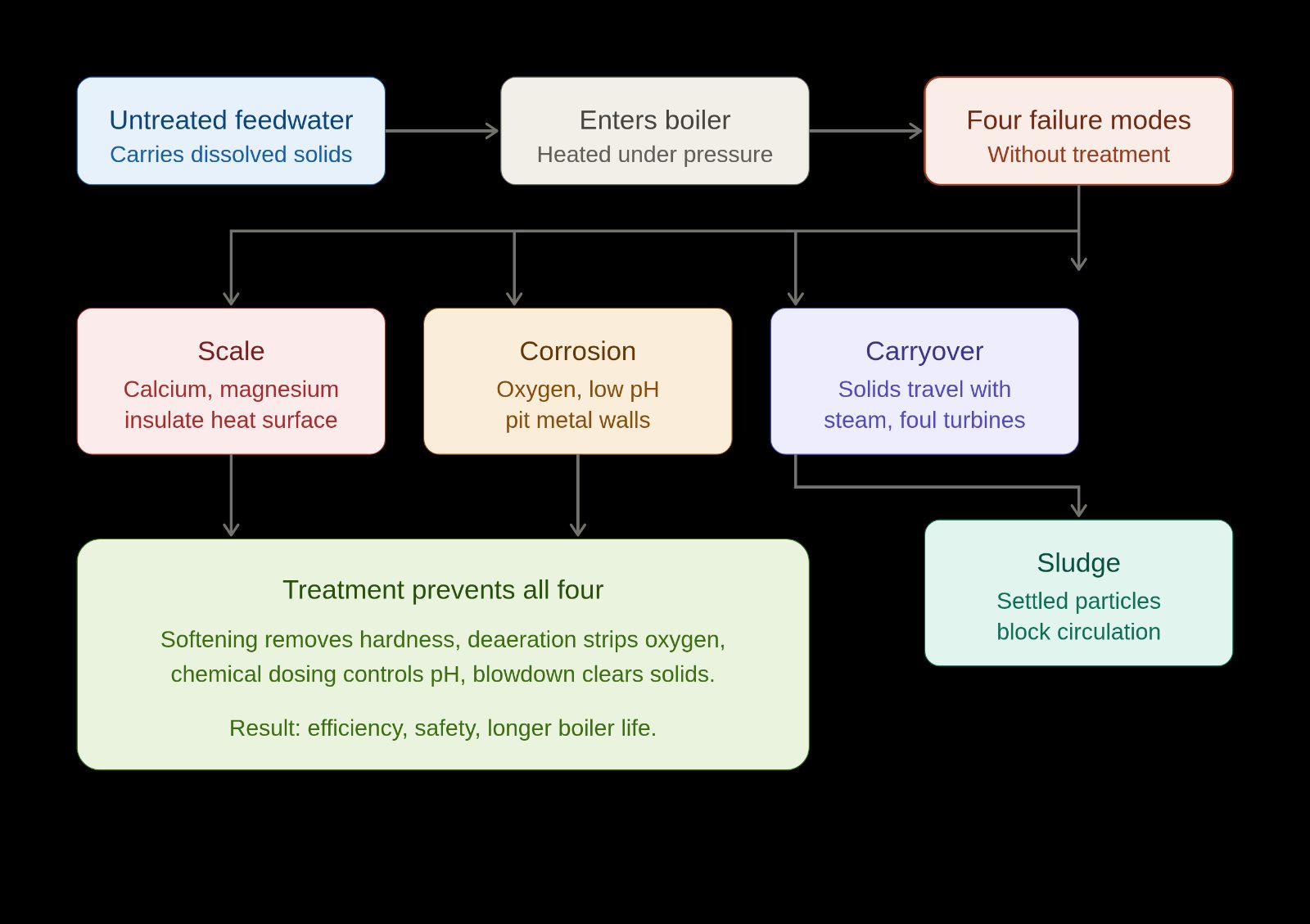
Dissolved minerals such as calcium and magnesium settle out of the water as hard deposits called scale. Scale sticks to the heat transfer surfaces inside the boiler and acts like an insulating layer, forcing the boiler to burn more fuel to produce the same amount of steam. As a general industry guide, even a thin scale layer raises fuel consumption and reduces efficiency, and thick scale can cause tubes to overheat and rupture.
Problem 2 — Corrosion
Dissolved oxygen and carbon dioxide in feedwater attack the steel inside the boiler. Oxygen causes pitting, which eats small but deep holes into the metal, while carbon dioxide forms carbonic acid that corrodes condensate return lines. Corrosion thins and weakens the pressure vessel and tubing from the inside, often staying hidden until a leak or failure appears.
Problem 3 — Carryover and foaming
When boiler water holds too many dissolved and suspended solids, it can foam and carry water droplets along with the steam. This is called carryover. It sends impurities into steam lines, valves, and downstream equipment, causing deposits, water hammer, and damage to the equipment the steam is meant to power or heat.
The business case for treating your feedwater
Feedwater treatment is one of the highest-return investments a plant can make. It lowers fuel costs by keeping heat transfer surfaces clean, extends the working life of an expensive asset, reduces unplanned shutdowns that stop production, and keeps the plant safe and compliant since a boiler is a high-pressure vessel where corrosion and overheating are real hazards. The cost of treatment is small compared to the cost of scale, corrosion, and emergency repairs.
How boiler feedwater treatment works
Treatment is done in stages, both outside and inside the boiler. External treatment removes impurities before the water enters the boiler and includes softening to remove hardness, reverse osmosis or demineralization for high-pressure boilers, and deaeration to strip out dissolved oxygen and carbon dioxide. Internal treatment uses controlled chemical dosing inside the boiler, such as oxygen scavengers, phosphates, and pH adjustment, to handle remaining impurities. Blowdown is the controlled removal of a portion of concentrated boiler water to keep dissolved solids under control without wasting energy.
Best practices for plant operators
Test feedwater and boiler water quality regularly and keep records. Maintain deaerators and softeners so they perform as intended. Follow a correct blowdown schedule, neither too little nor too much. Treat returned condensate, as it can pick up corrosion products on the way back. Match the treatment program to your specific water source and boiler type rather than copying a generic plan.
Talk to ME Engineering
At ME Engineering Pvt. Ltd., we design and manufacture industrial steam boilers built for reliable, efficient operation, and we help clients set up the right water treatment approach for their plant and water conditions. If you are planning a new boiler installation or want to improve the efficiency and lifespan of an existing system, contact our team.